Hemp Seed Oil vs. CBD: When Hemp Marketing Creates Confusion
|
Getting your Trinity Audio player ready...
|
A few months ago, a patient walked into Dr. Vaz’s office and mentioned during his visit that he had tried hemp products for relief, but they simply did not work.
Dr. Vaz was puzzled. Having read clinical studies and witnessed firsthand the relief that well-formulated topical cannabidiol (CBD) can provide, he knew there was more to the story. What had the patient tried, and what had led him to conclude that neither hemp nor CBD could help him?
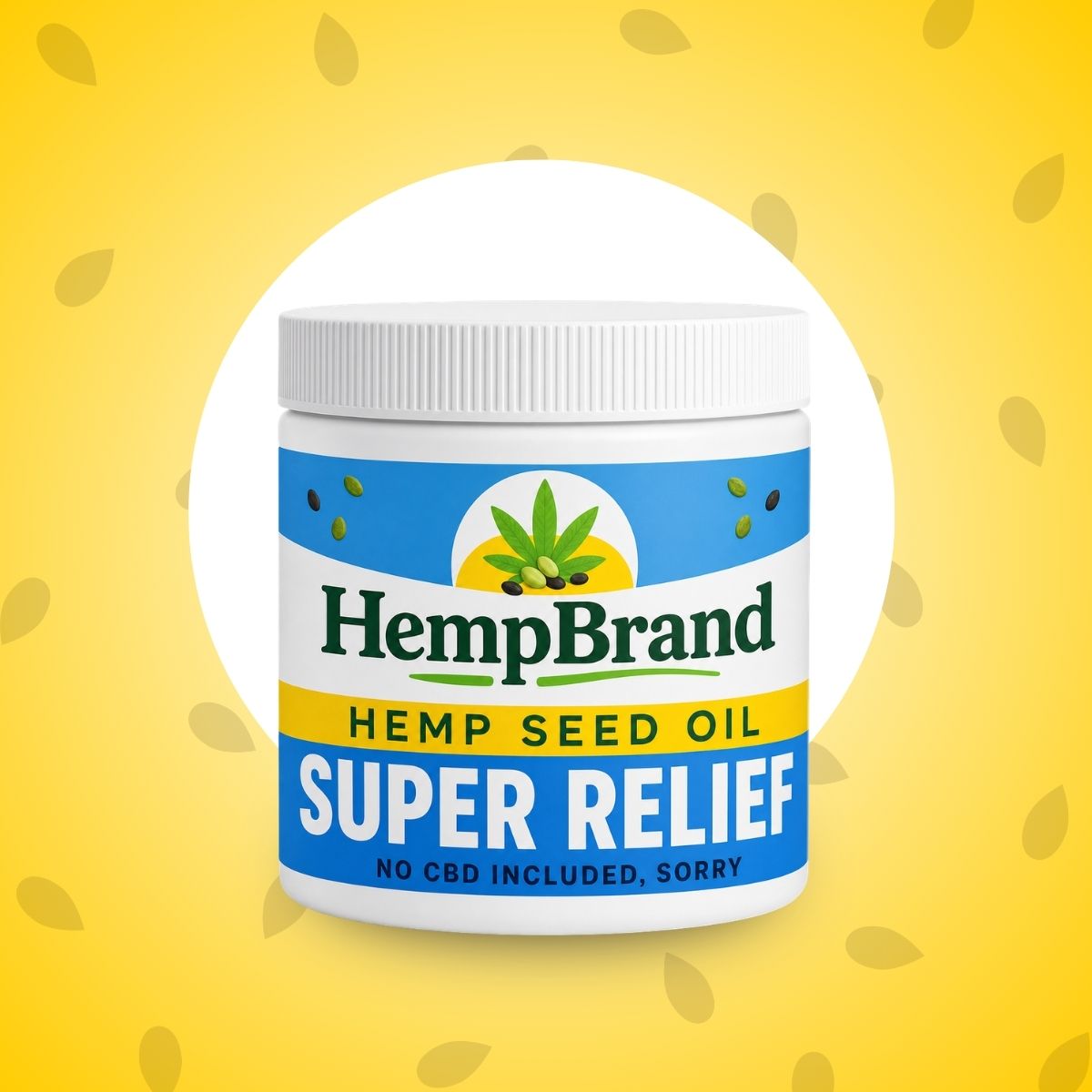
During a subsequent visit, the patient brought in the product: a jar of pain-relief cream from a nationally recognized brand, purchased from a major retailer. The packaging leaned heavily into the word “hemp,” creating the impression that its benefits came from the hemp plant.
But when Dr. Vaz turned the jar around and read the label, the story changed.
The cream contained hemp seed oil, but no meaningful amount of CBD or any other cannabinoid. Its pain-relieving properties came from a conventional active ingredient — such as menthol, lidocaine, or trolamine salicylate — not from cannabinoids.
Those ingredients may provide temporary relief, and there is nothing inherently wrong with using them. The problem was that the patient believed he had tried CBD. He had not. It is an understandable mistake, and one that many shoppers are unfortunately making due to confusing marketing.
Hemp Seed Oil Is Not CBD Oil
“Hemp oil,” “hemp seed oil,” “hemp extract,” and “CBD oil” may sound like different names for the same thing. In reality, they can describe very different ingredients.
Hemp seed oil is made by pressing the seeds of the hemp plant, much as olive oil is pressed from olives. It is rich in fatty acids and can be a useful ingredient in foods and skincare products. Applied to the skin, it can help moisturize, soften, and support the skin barrier.
What it generally does not provide in significant amounts is CBD.
Cannabinoids are concentrated primarily in the flowers and other aerial parts of the hemp plant, not inside its seeds. Properly produced hemp seed oil therefore contains little to no CBD or other cannabinoids. Commercial hemp seed oil may contain incidental cannabinoids when the seeds come into contact with resin from cannabinoid-rich flowers and leaves during harvesting and processing. It is not equivalent to a standardized, cannabinoid-rich CBD extract.
On a product label, hemp seed oil may appear under the botanical name Cannabis sativa seed oil. The Latin terminology may sound impressive, but it still means oil pressed from hemp seeds. It does not mean the product contains CBD.
Where Does CBD Come From?
CBD, or cannabidiol, is a naturally occurring cannabinoid found in hemp. To collect it, producers harvest cannabinoid-rich unpollinated female flowers and other aerial material and use extraction methods such as ethanol or supercritical carbon dioxide.
That extract can then be refined into full-spectrum hemp extract, broad-spectrum hemp extract, or CBD isolate. These cannabinoid ingredients are incorporated into tinctures, creams, balms, gels, edibles, and other products.
A genuine CBD topical should clearly state that it contains CBD and disclose how many milligrams are in the container. If the front of a jar says “hemp,” but the label mentions only hemp seed oil and gives no concentration quantity, take a closer look; the product may not contain CBD at all!
Why the Difference Between Hemp Oil and CBD Matters
Our skin has its own endocannabinoid signaling system, a network of receptors involved in sensation, immune activity, pain perception, and other physiological processes. CBD is being studied for the ways it influences that system and its potential to bring targeted relief.
Hemp seed oil serves a different purpose. It can be a nourishing moisturizer, but it should not be expected to behave like a cannabinoid-rich extract. If a “hemp” pain cream contains menthol or lidocaine, those ingredients — not the hemp seed oil — are likely responsible for its immediate cooling or numbing effect.
The distinction may be hidden in small print, but it makes all the difference.
Before You Buy, Turn the Package Around
Large retailers and online marketplaces sell plenty of products decorated with hemp leaves and reassuring language about “natural hemp relief.” Many contain hemp seed oil rather than CBD. Amazon, for instance, generally does not permit CBD listings, so shoppers should be especially cautious about assuming that a “hemp” product found there contains actual cannabinoids.
Wherever you shop, take a moment to look beyond the front of the package:
- Look for CBD or cannabidiol, not just “hemp” or Cannabis sativa seed oil.
- Find the total quantity of CBD, stated in milligrams.
- Look for a batch or lot number.
- Look for a link to a recent, independent Certificate of Analysis (COA).
- Make sure the COA matches the product and confirms its cannabinoid content.
- Choose a transparent company with reliable sourcing, accessible contact information, and a consistent testing history.
Smaller, independent CBD companies can sometimes provide more transparency than nationally distributed “hemp” brands, but no company should be trusted on branding alone. Read the label and verify the testing.
Most importantly, do not let a hemp seed oil product convince you that you have already tried CBD. If you are unsure what a product contains, bring it to your physician or send your question to Dr. Vaz through the Hemp for Health Academy question form. Sometimes, understanding what is actually inside the jar is the most important part of finding something that works.