CMS’ Hemp Initiative: A New Chapter for Physician-Guided Care
|
Getting your Trinity Audio player ready...
|
In my own clinic, I have seen positive changes in many patients who use hemp under medical supervision. Those experiences have strengthened my belief that hemp deserves a thoughtful place in the conversation about patient care, with attention to the formulation, the dose, and how each patient responds.
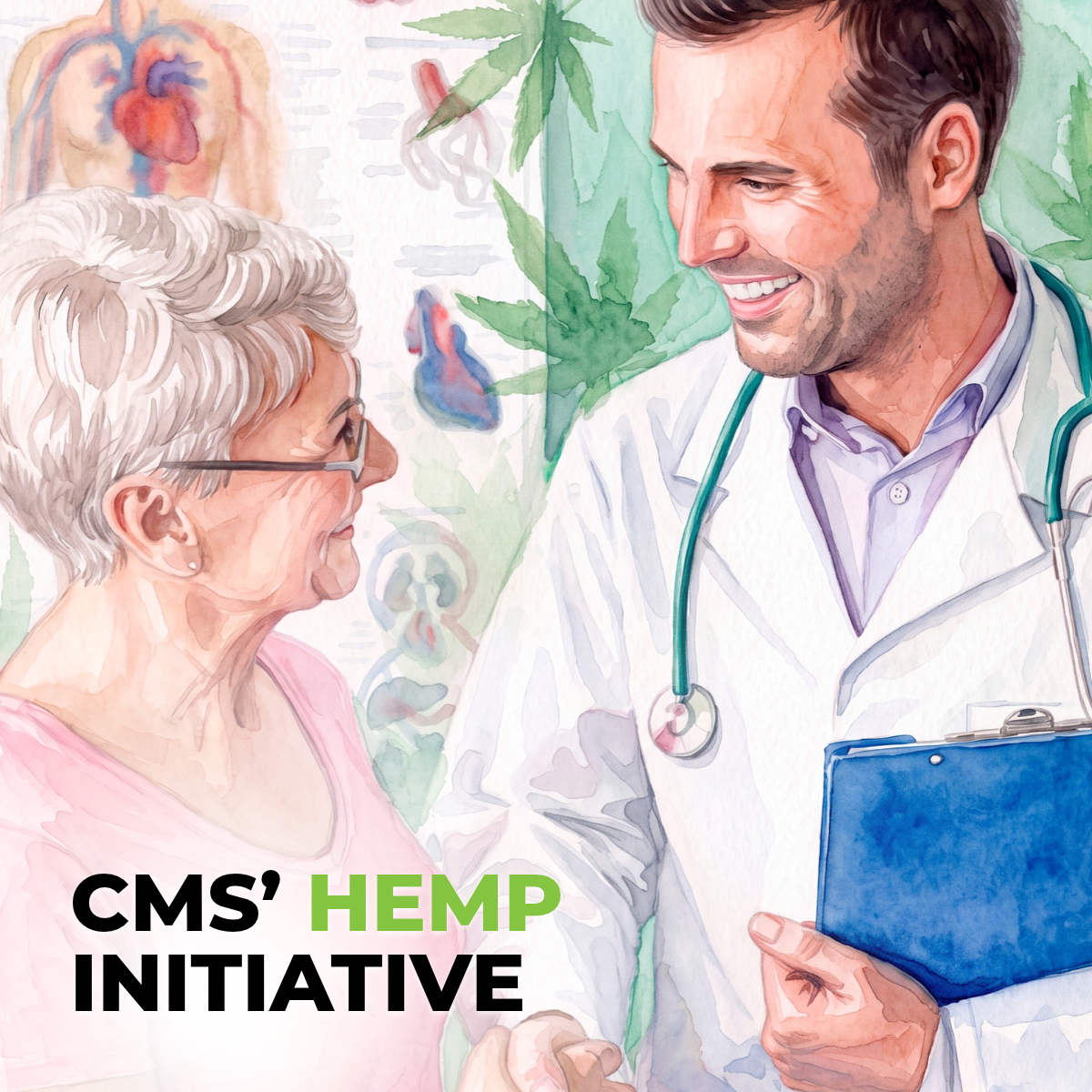
That is why I am pleased to share a recent development with my colleagues: CMS has introduced a pilot initiative that creates a pathway for participating practices to provide hemp-derived products to qualifying Medicare patients. For those of us interested in physician-guided hemp care, this is an encouraging step!
What does the CMS initiative offer?
Through the Substance Access Beneficiary Engagement Incentive, approved organizations in specific CMS care models may provide up to $500 in eligible hemp products per qualifying patient each year, as part of a supervised care plan.
Participating organizations bear the expense; Medicare does not reimburse the products. Still, colleagues working in accountable care understand that the value of an intervention extends beyond reimbursement. If a carefully managed approach helps patients achieve better symptom control and reduces avoidable visits, that could benefit both patients and the practice. That potential deserves evaluation, with outcomes documented over time.
Which pathways are available?
For family practices and clinics in Texas and elsewhere, participation depends on the organization’s model affiliation and approval:
- Now, in 2026: The initiative is available to approved participants in ACO REACH and the Enhancing Oncology Model (EOM).
- Beginning January 1, 2027: It becomes available to eligible, approved participants in LEAD; Long-term Enhanced ACO Design, the model succeeding ACO REACH.
If your practice belongs to an accountable care organization, I encourage you to ask its leadership about these pathways and whether it plans to offer the initiative.
Both formulation and guidance matter
Hemp is defined under the federal framework referenced by CMS as cannabis containing no more than 0.3% delta-9 THC by dry weight. The initiative adds product requirements, including a limit of 3 mg of THC per serving for oral products, independent testing, and compliance with applicable state and federal law. Inhalable products are excluded.
In practice, quality care involves more than choosing a product below a THC limit; it means selecting an appropriate and reliably sourced formulation and dose, setting clear goals with the patient, and following up to assess the response. That is where physician involvement can make a meaningful difference.
The physician-formulated CBD line that I launched in 2021, Jammin Canna, reflects that approach. We welcome conversations about selected formulations designed to meet the initiative’s product requirements, along with the documentation practices need to evaluate them.
If you have questions about supervised hemp use, product selection, recommended dosing, or where your practice might begin this process, please contact me and the Hemp for Health team. I would welcome the opportunity to exchange experiences and explore what this development could mean for your patients.
Garth O. Vaz, MD, is a practicing family physician and founder of The Vaz Clinic in Gonzales, Texas. He is also the founder of Jammin Canna, LLC, a company dedicated to producing third-party, lab-tested, physician-formulated CBD products for health. Dr. Vaz is eager to share his knowledge with his colleagues and invites all to reach out to him if they have any questions.
These statements have not been evaluated by the Food and Drug Administration. These products are not intended to diagnose, treat, cure, or prevent any disease.